
10 ways brands can use augmented reality in marketing
augmented reality (AR) is used in marketing to turn any touchpoint (a pack, a poster, a shop, a website or a stand) into an interactive experience that opens from the phone, usually with a QR and without downloading anything. The uses that work best are those that answer a specific customer question or give them a real reason to play, try or share.
Most brands do not ask "what is augmented reality?", but "what could I do with it?". These are ten practical applications, ordered from the simplest to the most ambitious, with an idea of when each one makes sense.
1. Interactive packaging
The pack is the advertising medium the customer already has in their hands. A QR or a visual code on the box can open an animated recipe, a how-to tutorial, a brand story or a 3D character. It works especially well in food, drinks, cosmetics and gift products. There is more detail in how to turn packaging, posters and print into interactive media.
2. Posters, leaflets and outdoor advertising
A static poster gives way to a piece that comes to life: an animation, a video, a game or a 3D product. On bus shelters, billboards and in magazines, it helps the advert be memorable and, above all, measurable: every scan is an interaction you can count.
3. 3D product visualisation
Letting the customer place a sofa, a fridge or a machine in their own space reduces purchase doubt. It is one of the uses with the clearest return in eCommerce and B2B. We expand on it in product visualisation with AR.
4. Virtual try-on
Glasses, jewellery, watches, make-up, footwear or clothing: the phone camera lets people "try on" the product before buying it. It is a use case with plenty of scope in fashion and beauty (see what virtual try-on is).
5. Brand games and challenges
A treasure hunt around the city, a mini-game played on a table or a challenge with a camera filter. AR brings the "wow" factor that gets people to take part and share. It is the ground where it meets gamification.
6. Experiences in the physical shop
Points of interest that activate when a display is scanned, product guides on the shelf or a treasure hunt around the shop to increase dwell time. See AR for retail.
7. Trade shows and events
A stand with an AR experience attracts people walking down the aisle and gives the sales team something to show: a large product visible at real scale, a demonstration that will not fit on the stand or a game that collects contact details.
8. Product launches and seasonal campaigns
Halloween, Christmas, the sales or the launch of a collection: AR makes it possible to create an activation with its own date and mechanic, at a contained cost and timeframe if it is planned as WebAR.
9. Social media and filters
Filters and lenses for Instagram, TikTok or Snapchat take the brand to where the audience already is. They are light, shareable and suited to awareness campaigns (see our Snaps services).
10. Manuals, support and training
Overlaying instructions on the product itself reduces errors and calls to technical support. It is one of the AR uses with the most future outside pure marketing, and it connects with immersive training.
How to choose among the ten
Ask yourself three questions:
- What do I want to achieve? Awareness, shop traffic, leads, sales or fewer returns.
- Where is my customer at that moment? On the street, at home, in the shop or at a trade show. The touchpoint defines the format.
- What content do I have? If you already have 3D models of the product, cases 3 and 4 are faster to launch.
Key ideas
- AR works best when it resolves a doubt or gives a reason to play, not when it is mere decoration.
- The pack, the poster and the shop are the simplest starting points.
- With WebAR the customer accesses it from a QR, without installing any application.
- Every interaction can be measured: scans, time, shares, leads and clicks.
- The same 3D model can be reused across several of these uses.
Frequently asked questions
Which use of augmented reality is best to start with?
The simplest are interactive packaging and posters with a QR, because they do not require integration with other systems and are launched quickly.
Is augmented reality useful for B2B companies?
Yes. It is used to show machinery at trade shows, explain technical products or support the customer on the equipment itself.
Do I need an app to run an AR campaign?
Not necessarily. Most marketing campaigns are delivered with WebAR, which opens in the phone's browser. Compare both options in WebAR or AR in an app.
Can the result of an AR campaign be measured?
Yes: scans, sessions, interaction time, shares, leads and clicks through to purchase. We explain it in how to measure the ROI of an AR campaign.
More guides on this topic
What Is Augmented Reality? A Simple Guide for Businesses
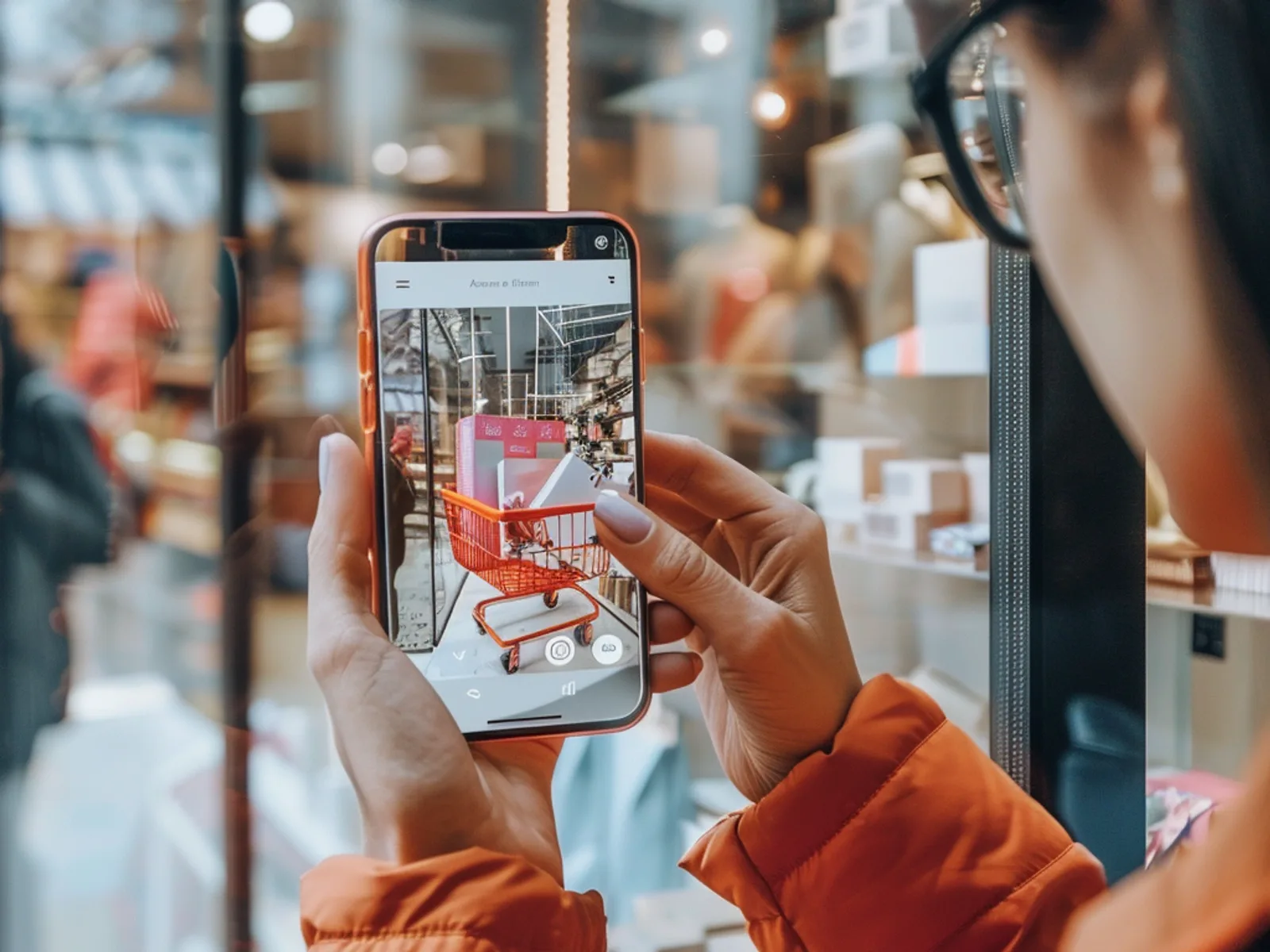
Augmented reality (AR) overlays digital content, such as 3D products, animations, games or information, onto the real world through a smartphone camera. For businesses it turns packaging, posters, stores and product pages into interactive experiences that customers can try instantly, usually in the browser without downloading an app.
WebAR vs app-based AR: which should you use?
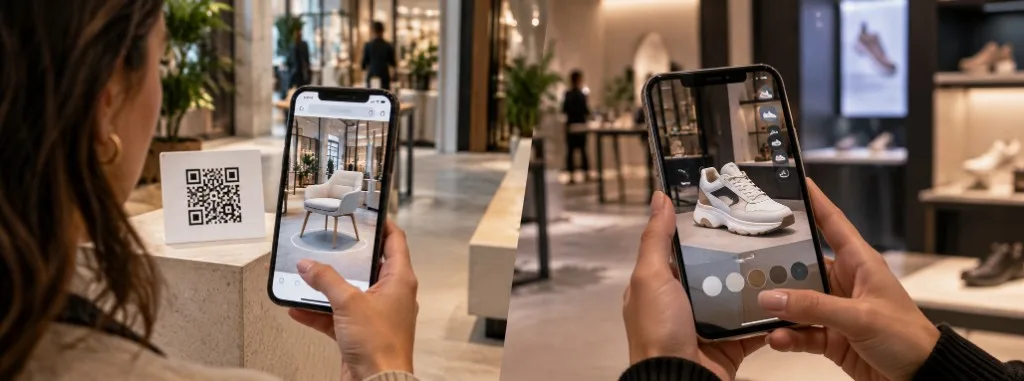
WebAR and app-based augmented reality both place digital content over the real world, but they do not solve the same problem. WebAR opens in the browser from a QR code or a link, with no download, and prioritises reach. An app requires installation and prioritises depth: advanced features, repeat use and offline work.
How Much Does an Augmented Reality Experience Cost?
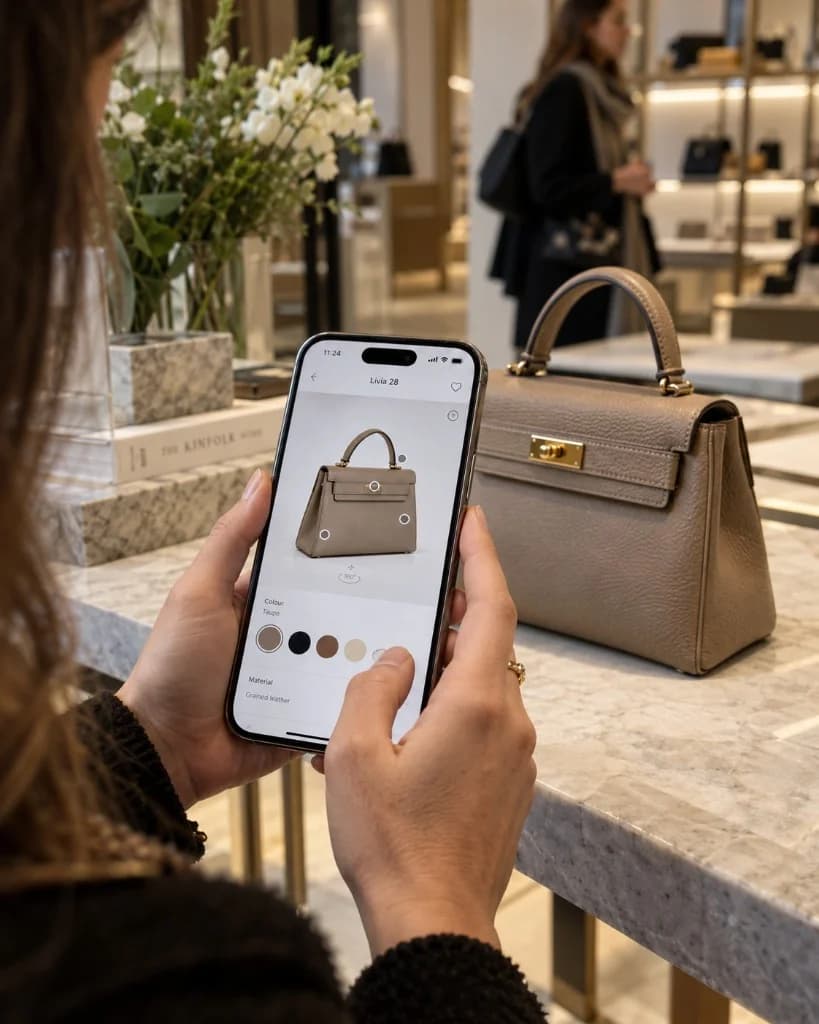
There is no single published price. The cost of an augmented reality experience depends on the number and quality of 3D assets, interactivity, the platform (browser or app), integrations such as CRM or eCommerce, and how long the campaign stays live. Tell us about your idea and we will prepare a free, no-obligation quote.