
How Much Does an Augmented Reality Experience Cost?
There is no single published price. The cost of an augmented reality experience depends on the number and quality of 3D assets, interactivity, the platform (browser or app), integrations such as CRM or eCommerce, and how long the campaign stays live. Tell us about your idea and we will prepare a free, no-obligation quote.

Types of augmented reality experience
Most business AR projects fall into four types: a 3D product in AR, an interactive marketing experience, a gamified campaign, and a custom or app-based experience. The quote depends on how much 3D content, interactivity and integration the project needs.
| Type of experience | Example |
|---|---|
| 3D product in WebAR | Viewing a product to scale from a product page or QR code |
| Interactive AR experience | Packaging or poster that triggers video, 3D or animation |
| Gamified AR campaign | Treasure hunt, collection or challenge with prizes and lead capture |
| Custom or app-based AR | Branded app, virtual try-on or multi-location experience |
What drives the cost of an AR project?
- 3D content: the number of models, their level of detail and whether existing CAD files or 3D assets can be reused. 3D production is often the largest single item.
- Interactivity: a model you can view is simpler than a game with rules, scoring, prizes and leaderboards.
- Platform: WebAR in the browser is usually quicker and cheaper to roll out than a native app, which needs store publication and maintenance.
- Integrations: lead capture, CRM export, eCommerce links, coupon codes or analytics dashboards add development time.
- Languages and locations: a campaign across several countries needs translated content and testing. The IKONO treasure hunt ran in 7 cities and 7 languages from a single codebase, which kept that cost down.
- Duration and hosting: how long the experience stays live and how much traffic it needs to handle.
How to keep AR costs under control
- Start from one clear objectivePick the one metric that matters most (leads, sales, footfall or awareness) and design the experience around it.
- Reuse existing assetsCAD files, product photography and brand assets can shorten 3D production considerably.
- Choose WebAR unless you need an appNo-install experiences reach more people and avoid app store costs.
- Design for reuseA modular experience can be reskinned for the next season. IKONO's Easter game was built so the eggs could be swapped for Halloween or Christmas elements with no extra development.
Is augmented reality worth the investment?
AR is worth it when the experience is tied to a measurable business goal. Because every scan, game and click is tracked, you can compare cost per interaction or cost per lead with other channels. In Visualife's H&M Halloween campaign, the app passed 10,000 downloads and 5,000 players in a single week, alongside growth in members, footfall and sales.
Key takeaways
- Cost depends on the project: ask for a free quote instead of starting from a generic price.
- 3D content, interactivity, platform and integrations are the main cost drivers.
- WebAR is usually the most cost-effective way to reach a wide audience.
- Reusable, modular experiences lower the cost of future campaigns.
Frequently asked questions
What is the cheapest way to start with augmented reality?
A single 3D product viewable in WebAR from a QR code or product page is usually the simplest place to start. Ask for a free quote and we will tell you what fits your case.
Does an AR app cost more than WebAR?
Usually, yes. A native app needs development for iOS and Android, store publication and ongoing maintenance, while WebAR runs in the browser from a single build.
Are there ongoing costs after launch?
Hosting, maintenance and analytics may carry an ongoing cost depending on the platform and how long the experience stays live. We include that in the quote.
How long does it take to build an AR experience?
It depends on the content and the complexity. Tell us about your idea and we will include a timeline in the quote, with no obligation.
More guides on this topic
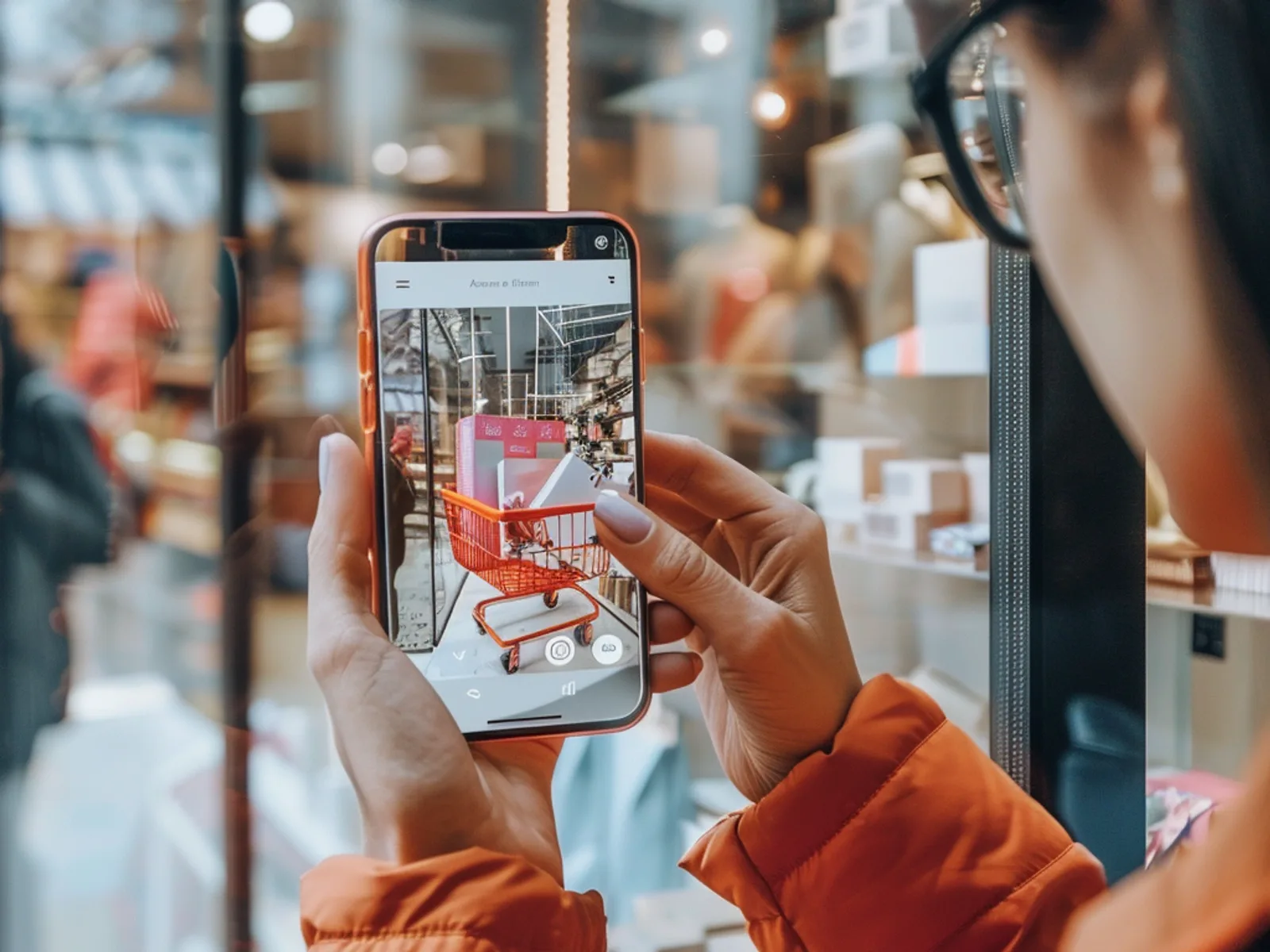
What Is Augmented Reality? A Simple Guide for Businesses
Augmented reality (AR) overlays digital content, such as 3D products, animations, games or information, onto the real world through a smartphone camera. For businesses it turns packaging, posters, stores and product pages into interactive experiences that customers can try instantly, usually in the browser without downloading an app.
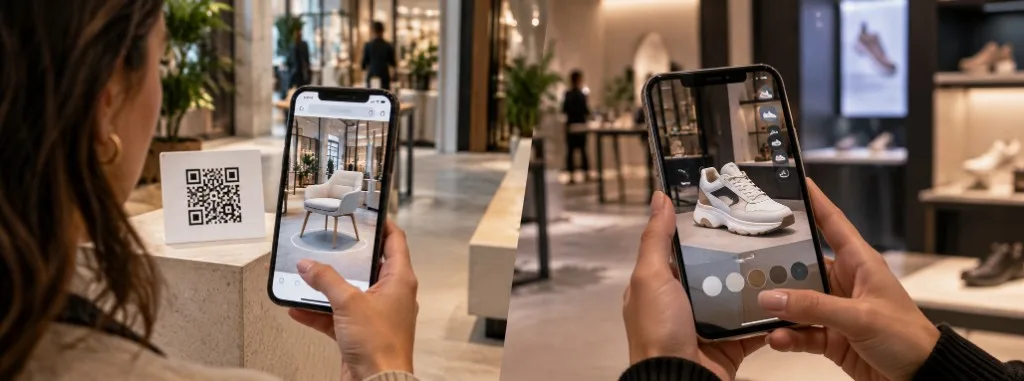
WebAR vs app-based AR: which should you use?
WebAR and app-based augmented reality both place digital content over the real world, but they do not solve the same problem. WebAR opens in the browser from a QR code or a link, with no download, and prioritises reach. An app requires installation and prioritises depth: advanced features, repeat use and offline work.
10 ways brands can use augmented reality in marketing
Ten practical ways to use augmented reality in marketing: packaging, posters, virtual try-on, games, events and retail. Examples and tips for getting started.