Smart glasses and augmented reality: how to prepare your brand for the 2027 wave
In a single week of September, Snap and Meta put prices and dates on the new generation of glasses. The phone will stay in charge for a while, but brands that prepare their 3D content now will get there first.
For years we heard that “the year of the glasses” was just around the corner. In September 2026 it finally arrived, and it took just seven days. On 16 September, Snap opened pre-orders for Specs, its standalone augmented reality glasses, at $2,195 [1]. On 23 September, at Meta Connect, Meta unveiled Meta VR Glasses, mixed reality glasses weighing around 100 grams that arrive in spring 2027, refreshed the Ray-Ban Meta range and brought Meta Ray-Ban Display to Europe [2][3].
This is more than launch-season noise. According to IDC, shipments of display-less smart glasses grew 167% year on year in the first quarter of 2026, to around 2.25 million units: almost as many in three months as in the whole of 2024. Glasses with displays (AR, VR and MR) grew 86% over the same period. IDC sums it up as “the kind of growth that reorganises industries” [4].
So what does this mean for a brand, a retailer or an industrial company? Here is a quick summary and a practical roadmap.
What was announced, in 60 seconds
- Snap Specs: augmented reality glasses with see-through lenses and no cable or puck, controlled with your hands and voice. They let you place 3D products at full scale using the Shopify Catalog, translate conversations with subtitles in 60 languages and follow directions overlaid on the street. They launch with enterprise partners such as Salesforce, AWS and NVIDIA, and ship this autumn in the US, UK and France [1].
- Meta VR Glasses: around 100 g on the head, with the processor and battery in a puck connected by an optical cable. Micro-OLED displays, eye and hand tracking, and full-colour passthrough. They will cost around $1,300, launch in spring 2027 and Spain is among the launch countries [3].
- Meta Ray-Ban Display: Meta's glasses with a built-in display arrive in Germany, France and Italy on 13 October, from €899. Spain is not on the list yet [2].
- Ray-Ban Meta (Gen 3): slimmer design, 12 MP camera, nine hours of battery and new styles such as the Aviator, from $449 [2].
Why it matters (even if your customers don't wear glasses yet)
1. The screen is moving closer to our eyes
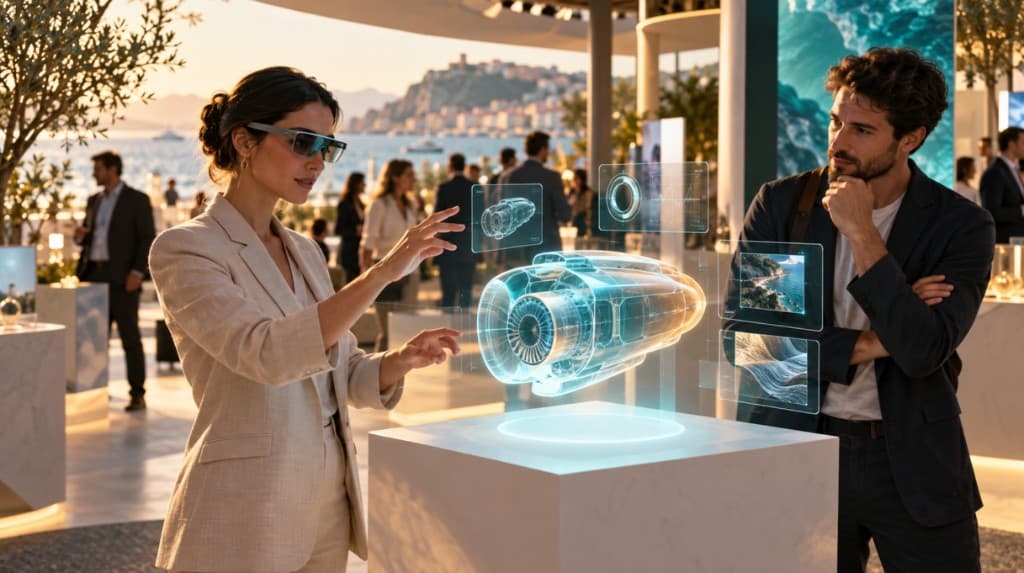
For fifteen years, augmented reality has lived on the phone: take it out, point, look, put it away. With glasses, digital content appears directly in your field of view, hands-free and in real context. Snap pitches it for field work as a way to keep “their hands free and their eyes up” [1]. For a brand, that means moving from asking for attention to offering help at exactly the right moment.
2. 3D content stops being a campaign and becomes an asset
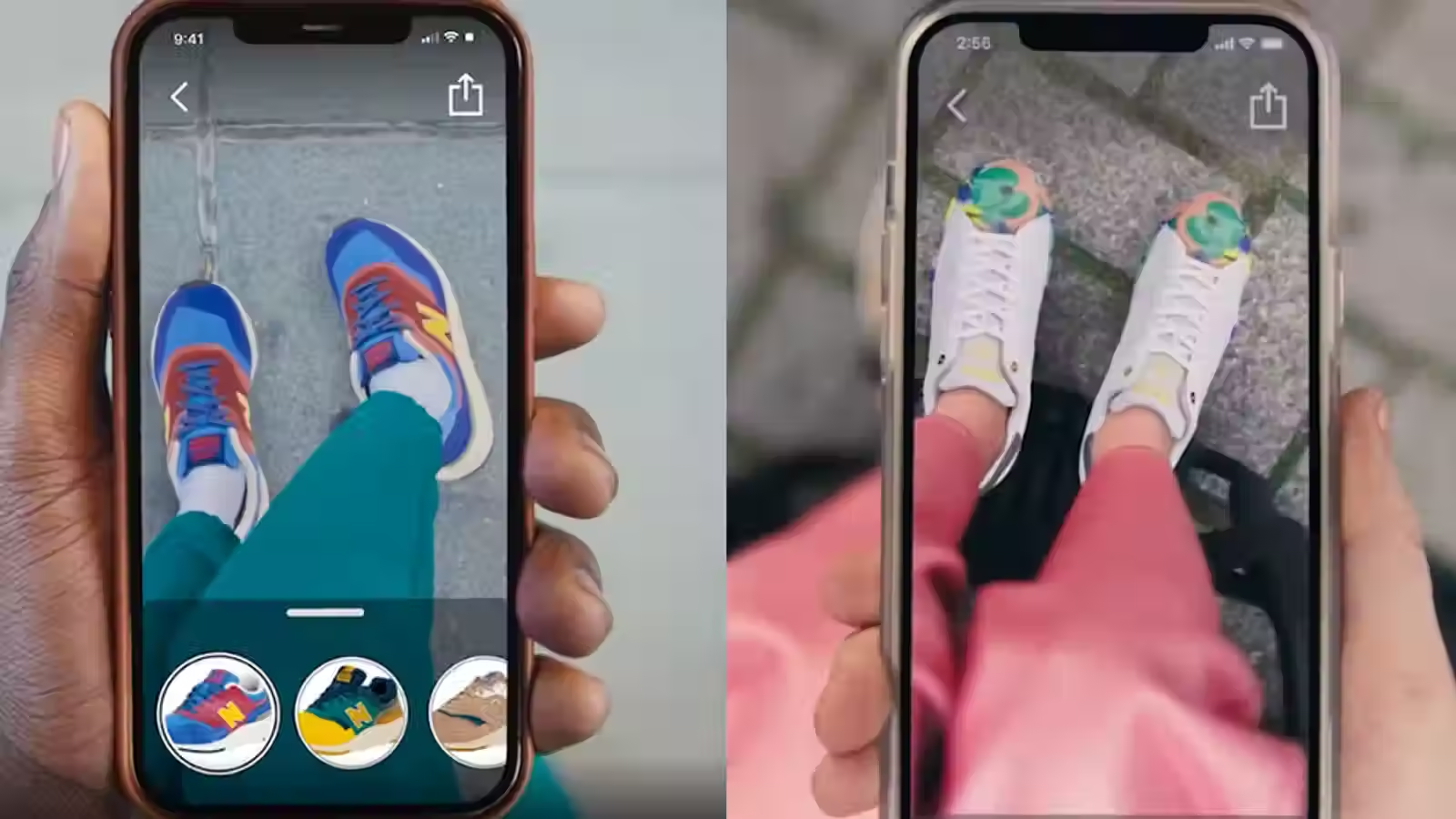
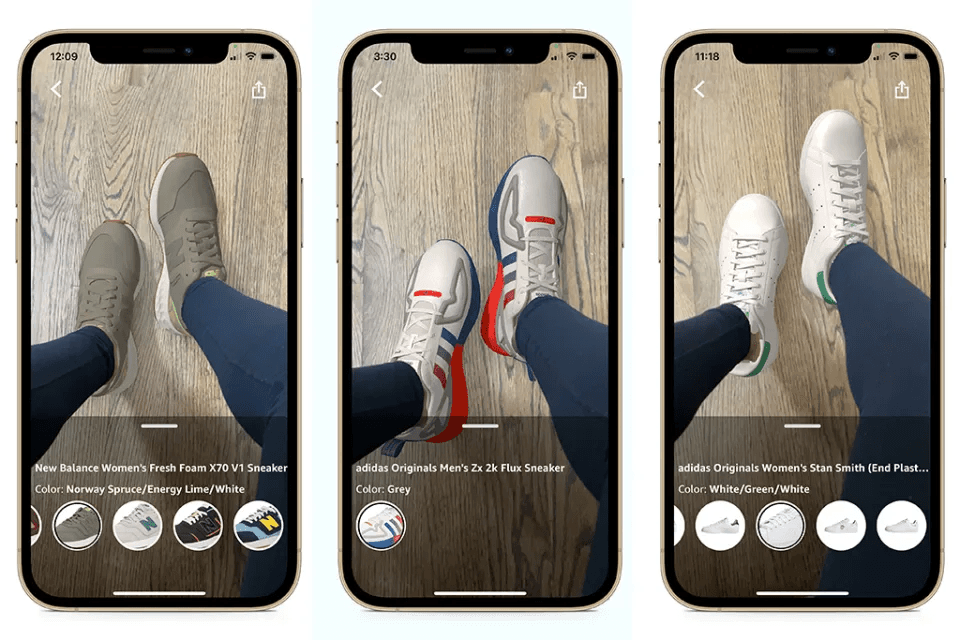
What works today in a mobile WebAR experience, such as a 3D model of your product, a configurator or a location-based game, is the foundation of what will appear in glasses tomorrow. Snap integrating the Shopify Catalog so shoppers can place products at full scale in their living room shows exactly where commerce is heading [1]. A good 3D model made today can be reused tomorrow on the web, on mobile, in glasses and in virtual reality.
3. Physical experiences are selling technology again
Snap didn't start with an ad, it started with a space: Specs First Look, a pop-up at Westfield Century City in Los Angeles, open from 2 October to 7 November, with 15- to 25-minute demos and a virtual queue when it gets busy [5]. The lesson applies to any brand: when something is new, people need to try it to understand it. Trade shows, events and brand spaces are the natural place to do that.
4. Industry and training are already in production
You don't need to wait until 2027 to see a return. In Spain, the rail infrastructure manager ADIF has just renewed its extended reality rail training simulator, developed by Virtualware and in use since 2021, with a four-year contract worth more than €800,000 [6]. And Snap launched Specs with partners for store floors, factories and field work because, as the company puts it, “the majority of jobs aren't desk jobs” [1]. This is the territory of mixed reality for industry.
What is still unresolved
It pays to be realistic:
- Price and availability. Between €899 and more than $2,000, and with patchy availability in Spain, people wearing glasses will be a minority for a while.
- Privacy. The debate about cameras in glasses is very much alive; Meta has even launched an audio-only model with no camera [2]. Snap stresses that Specs do not use facial recognition and that an LED lights up when recording [1]. In Europe, any experience that uses a camera or personal data must be designed for GDPR from day one.
- Fragmentation. Meta, Snap, Apple, Google with Android XR and several Asian manufacturers are competing with different platforms. Betting on a single device is risky.
Bottom line: the phone will remain the main channel for augmented reality through 2026 and 2027. The advantage will go to those who prepare their content and processes now, so that moving to glasses is an adaptation rather than a fresh start.
A nearby example: location-based AR at scale
For World Space Week, The Pokémon Company and the European Space Agency (ESA) launched a collaboration with a touring exhibition, Pokémon GO events and real science content [7]. In Spain it stopped at ESAC in Villanueva de la Cañada (Madrid) on 3 October and can be visited at the Museu de les Ciències in Valencia from 6 October 2026 to 30 April 2027 [8]. It is a good reminder that mobile augmented reality, combined with location and gamification, already moves thousands of people into physical spaces. And it will be among the first things to jump to glasses.
Roadmap: 6 steps to prepare your brand
- Audit your 3D assets. Do you have optimised 3D models of your products, machinery or spaces? They are the raw material of any immersive experience, on mobile, in glasses or in virtual reality.
- Start with WebAR. Augmented reality in the browser, with no app to download, removes friction and lets you measure from day one: interaction time, conversions and return.
- Design for hands-free use. Think short interactions, by voice or gesture, and useful information in context: instructions on a machine, a product sheet on the shelf or a route around a trade show.
- Bring glasses to your events. A trade show or a launch is the perfect stage for customers and distributors to try a mixed reality experience on devices they don't own yet. It makes news, generates content and positions your brand as an innovator.
- Run a pilot in training or industry. This is where return is easiest to measure: fewer errors, shorter learning curves and safe training without stopping production.
- Measure and comply. Define KPIs before launch and design data handling (camera, location, biometrics) in line with GDPR.
In short
Smart glasses won't replace the phone tomorrow, but the calendar is now concrete: Specs arrive this autumn, Ray-Ban Display is already in Europe and Meta VR Glasses land in Spain in spring 2027. Brands that arrive prepared, with 3D content, proven WebAR experiences and teams used to thinking spatially, will be the first to make the most of the new channel.
At Visualife we design and build augmented, virtual and mixed reality experiences, immersive worlds and gamification for brands, trade shows and retail and industry. Not sure where to start? Try Spark, our free tool that suggests XR ideas for your company, or let's talk.
Sources
- Snap Newsroom: Making Computing More Human with SPECS (16/09/2026)
- Engadget: Everything announced at Meta Connect 2026 (23/09/2026)
- Road to VR: Meta Announces ‘VR Glasses’ (23/09/2026)
- IDC: Smart glasses surge, the XR market is rewriting its own rules
- Westfield Century City: SPECS First Look
- Virtualware: ADIF contract renewal (09/03/2026)
- ESA and The Pokémon Company: Europe-wide exhibition and astronaut Pikachu
- Generalitat Valenciana: Museu de les Ciències hosts the ESA and Pokémon exhibition (01/10/2026)