The Future of Footwear Shopping: Virtual Try-Ons with AR
The world of footwear retail has evolved enormously since the days when customers relied solely on the stock available
The world of footwear retail has evolved enormously since the days when customers relied solely on the stock available in stores to find the right shoe. In barely a decade, e-commerce has completely changed the way people buy their shoes; global online sales have soared as shoppers seek convenience, better prices, and a wider selection. However, the rapid expansion of online footwear sales has also posed new challenges for retailers.
One of the most significant is the high product return rate, along with the difficulty of replicating the experience of “trying on” shoes in a physical store. This is where augmented reality (AR) comes into play. By overlaying 3D footwear models onto a live view of the customer's feet. AR virtual try-on solutions have become a decisive factor for selling shoes online.
Below, we explore how AR is transforming the way companies attract customers, optimise operations, and foster brand loyalty in an increasingly competitive digital marketplace.
The rise of AR in online footwear retail
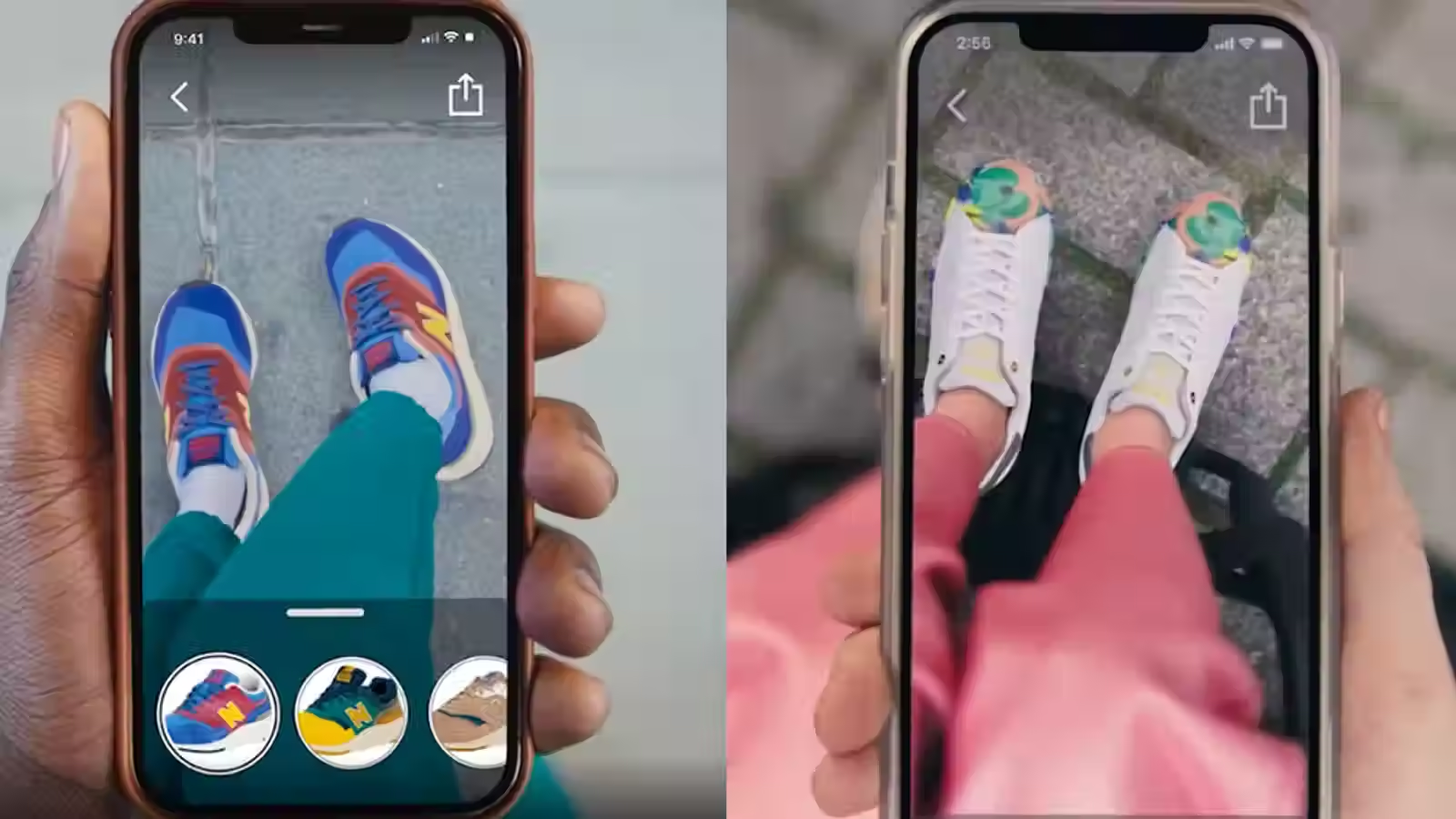
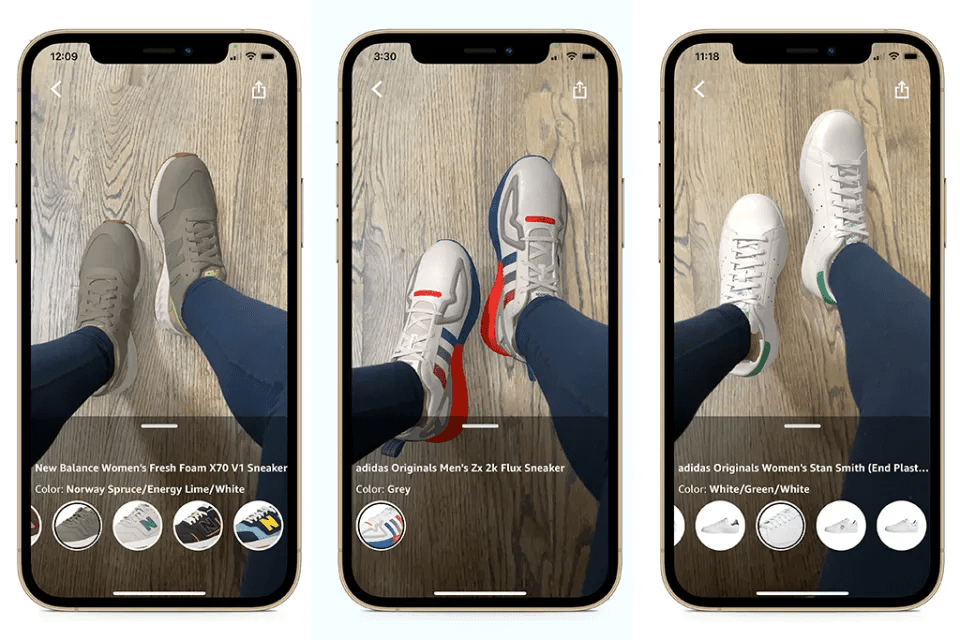
Augmented reality is not an entirely new concept; it has been used in various forms of advertising, video games, and interactive entertainment for years. However, recently, improved smartphone cameras, faster internet speeds, and more refined 3D modelling software have combined to bring AR to the general e-commerce public. Today, shoppers can point their phone camera at their feet and see how a pair of sneakers, boots, or shoes would look, almost as if they were wearing them for real. This option is highly beneficial for brands looking to stand out in a saturated market.
From novelty to necessity
In the early days, many footwear brands saw AR virtual try-on technology as something novel, a marketing gimmick to capture the attention of the most curious customers. Today, with the rise of mobile e-commerce and consumer expectations of fast, frictionless digital experiences, AR has become a powerful differentiator. Consumers want the advantages of online shopping (such as convenience and fast delivery) without giving up the reassurance of being able to try on footwear in a physical store. Since shoes can look or fit differently in reality than in photos, AR helps bridge that gap by showing the shopper a more realistic 3D representation.
Meeting consumer expectations
Generation Z and Millennial consumers have grown up surrounded by technology. They expect personalised experiences and a smooth, frictionless shopping journey. By incorporating AR-based virtual footwear try-ons, companies can offer an immersive, interactive, and modern experience that resonates strongly with these digital-native generations. As augmented reality experiences become more common on social media, in video games, and in lifestyle apps, their application in footwear retail feels like a natural extension of an already established tech trend.
How does the AR virtual try-on work?
Understanding the mechanics of this technology can help companies realise how straightforward integration can be. Although the specific approach may vary depending on the software provider or technology partner, the general principles are similar:
- Smartphone camera integration: The shopper opens an app or an AR module in their mobile browser. They point the phone camera at their feet, which the software recognises automatically.
Smartphone camera integration: The shopper opens an app or an AR module in their mobile browser. They point the phone camera at their feet, which the software recognises automatically.
- 3D modelling and tracking: The AR software uses computer vision and advanced image-processing algorithms to capture the dimensions of the feet (or at least their position and orientation). High-fidelity 3D models of the shoes are then overlaid onto the camera view, adjusting in real time to the angles, distance, and movement of the feet.
3D modelling and tracking: The AR software uses computer vision and advanced image-processing algorithms to capture the dimensions of the feet (or at least their position and orientation). High-fidelity 3D models of the shoes are then overlaid onto the camera view, adjusting in real time to the angles, distance, and movement of the feet.
- Instant visualisation: Within seconds, the user sees how the footwear would look from various angles. Many AR virtual try-on solutions even allow colour changes, different lighting adaptations, or size adjustments, depending on how sophisticated the software is.
Instant visualisation: Within seconds, the user sees how the footwear would look from various angles. Many AR virtual try-on solutions even allow colour changes, different lighting adaptations, or size adjustments, depending on how sophisticated the software is.
- E-commerce integration: Once the customer has virtually tried on a pair of shoes, they can add it to their shopping basket or receive recommendations for similar models, creating a seamless transition from the “try-on” phase to purchase.
E-commerce integration: Once the customer has virtually tried on a pair of shoes, they can add it to their shopping basket or receive recommendations for similar models, creating a seamless transition from the “try-on” phase to purchase.
The importance of accuracy in 3D modelling
At the heart of any AR virtual try-on solution is the quality of the 3D footwear model. Detailed, true-to-scale replicas help minimise discrepancies between the online look and reality. If the model is not faithful to reality, even by a small margin, it can mislead customers and lead to dissatisfaction or more returns. That is why partnering with an experienced AR technology provider, such as Visualife, through its collaboration with ShopAR, ensures companies get accurate, high-resolution 3D models. This precision is essential for building customer trust and streamlining the purchase process.
Benefits of AR for online footwear retailers
Implementing an AR virtual try-on offers numerous advantages that directly impact a retailer's profitability, reputation, and operational efficiency.
- Lower return rates: One of the biggest headaches for online footwear sellers is the high return rate due to models that do not fit well or descriptions that do not match reality. AR virtual try-ons give customers a much clearer idea of how the shoes will look, reducing purchases based on uncertainty. Although AR does not always guarantee a perfect fit, it is still a far better approximation than static images. In the long run, fewer returns mean lower shipping costs, fewer inventory complications, and greater profitability.
Lower return rates: One of the biggest headaches for online footwear sellers is the high return rate due to models that do not fit well or descriptions that do not match reality. AR virtual try-ons give customers a much clearer idea of how the shoes will look, reducing purchases based on uncertainty. Although AR does not always guarantee a perfect fit, it is still a far better approximation than static images. In the long run, fewer returns mean lower shipping costs, fewer inventory complications, and greater profitability.
- Greater customer engagement: Trying on shoes virtually is, in itself, fun. It adds an interactive and playful element to the shopping experience, encouraging customers to spend more time on the brand's website or app. Moreover, more engaged users are more likely to share the experience with friends, especially on social media.
Greater customer engagement: Trying on shoes virtually is, in itself, fun. It adds an interactive and playful element to the shopping experience, encouraging customers to spend more time on the brand's website or app. Moreover, more engaged users are more likely to share the experience with friends, especially on social media.
- Personalisation and upselling: AR virtual try-on technologies can be integrated with recommendation engines. If the software detects that the shopper has tried on running sneakers, it can suggest complementary products or similar models. This level of personalisation conveys a high degree of customer care and encourages loyalty.
Personalisation and upselling: AR virtual try-on technologies can be integrated with recommendation engines. If the software detects that the shopper has tried on running sneakers, it can suggest complementary products or similar models. This level of personalisation conveys a high degree of customer care and encourages loyalty.
- Market differentiator: Competition in e-commerce is fierce. Incorporating an AR feature is an added value that can attract curious shoppers and reinforce a modern, innovative brand image. As AR adoption becomes more widespread, early adopters gain a competitive advantage.
Market differentiator: Competition in e-commerce is fierce. Incorporating an AR feature is an added value that can attract curious shoppers and reinforce a modern, innovative brand image. As AR adoption becomes more widespread, early adopters gain a competitive advantage.
- Greater brand loyalty: When a customer finds an online footwear store that offers an engaging, accurate, and reliable shopping experience, they are more likely to become a repeat buyer. AR virtual try-on tools help improve brand perception by showing the customer that the company values their time and convenience.
Greater brand loyalty: When a customer finds an online footwear store that offers an engaging, accurate, and reliable shopping experience, they are more likely to become a repeat buyer. AR virtual try-on tools help improve brand perception by showing the customer that the company values their time and convenience.
In the next instalment (Part 2), we will delve into the key aspects of implementing an AR virtual try-on, the role of user experience and design, success stories, the future of AR in footwear retail, and how to take the leap with a leading provider like Visualife.